


Jonah Platt Says Hiding Won’t Stop the Hate

This is the second of a two-part series inspired by the ADL’s State of the Arts report, which documents how Jewish creatives are being pushed out of American cultural life.
Not everyone is waiting to be invited. In part one, I asked whether the people around us would stand with us publicly, and too often, the answer has been no. But while reporting this series, I kept meeting people who had stopped waiting for permission. Instead of shrinking, they set a bigger table.
Jonah Platt is one of them. The host of the podcast Being Jewish with Jonah Platt started out making content about “cool Jews talking about Jewish stuff,” with what he calls a “loud, proud Jewish identity.” He thought it would be a side gig. He never imagined it would become his full-time work, or that he’d half-jokingly embrace the title “full-time professional Jew.”
Platt’s argument is simple: Jews are already being criticized, so hiding buys nothing. “We should not be in any way sort of adjusting or downplaying or apologizing for who we are,” he told me. “We should be leaning in and celebrating and inviting people in.”
He’s also editor at large at Ora, a glossy print magazine celebrating Jewish life. He appeared on the cover of its first issue and writes for every issue. “It is just celebrating Jewish excellence, Jewish glamour, Jews being cool,” he said. “I think we should be doing what Ora magazine is doing in every single vertical possible.”
Platt has heard the fear that being too proud or too loud will invite trouble. “My response is they’re already saying it, and they’re doing it anyway,” he said. “So we might as well enjoy ourselves and show them how awesome we are and maybe, just maybe, people will respect and appreciate that. I’ve seen that many times.”

That’s the approach Manischewitz took. The 138-year-old brand, owned by Kayco, went through a rebrand that put Yiddish expressions on its packaging and merchandise. With antisemitism rising, a brand so closely tied to Jewish food could have gone quieter. Mirit Shalvi, Kayco’s senior vice president of marketing and strategic partnerships, said the company has “not felt a need to pull back from who we are. If anything, we’ve leaned into it.”
You don’t have to be Jewish to love a matzo ball, babka or knish
For Shalvi, visibility is the response. “The response to antisemitism isn’t to make our Jewish identity less visible,” she said. The brand is betting that food travels across communities. “You don’t have to be Jewish to love a matzo ball, babka or knish,” she said. Her goal is to be “proudly and authentically Jewish while also inviting everyone to the table.”
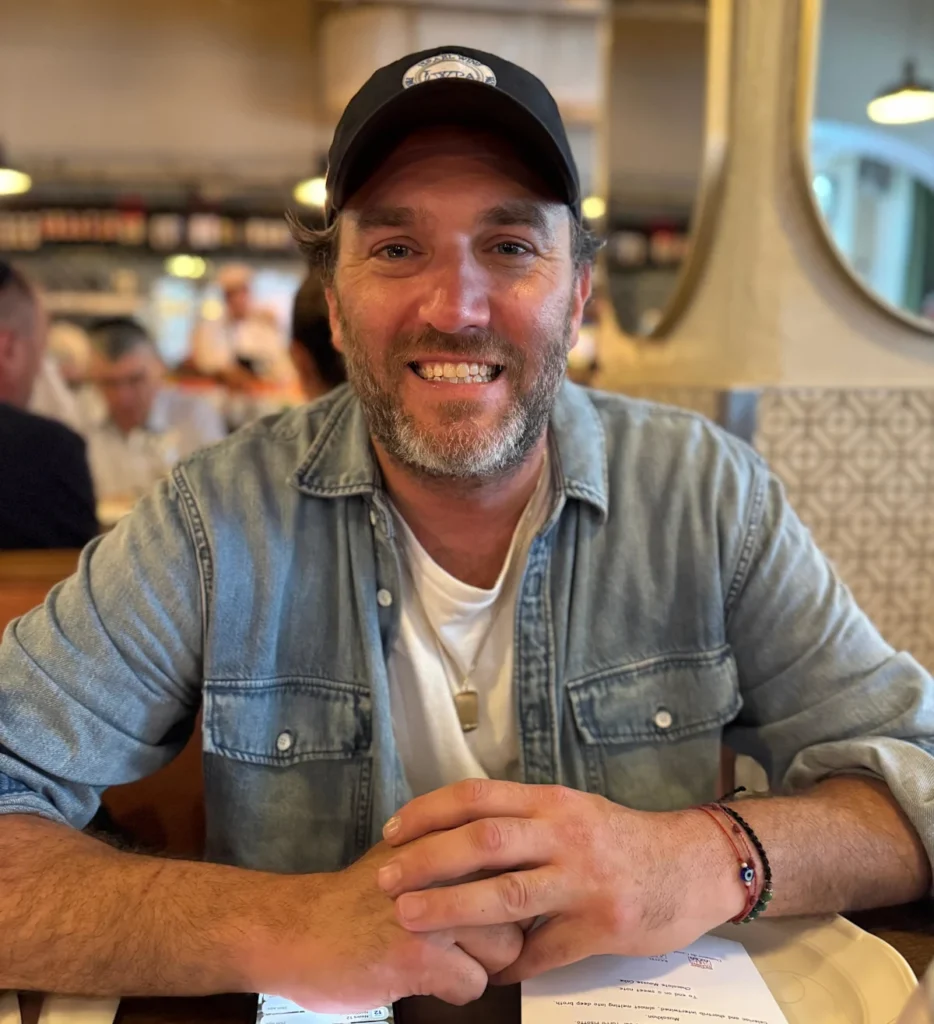
Josh Greenstein, executive vice president of the Israeli Wine Producers Association (IWPA), which represents nearly 40 wineries across the country, sees the other side of that bet. Some retailers, he said, are cautious about visibly promoting Israeli products because they don’t want to invite controversy. Sometimes “conversations that should simply be about wine become something entirely different because the bottle happens to come from Israel.” Greenstein’s answer is to keep pouring. Most of the people he pours for “aren’t interested in having a geopolitical debate over a glass of Cabernet,” he said. His pitch to skeptics: “Don’t take my word for it. Taste it.”
While wine can start a conversation, it can’t carry the whole load. Platt is clear that Jews can’t do this alone. “Allies are not a nice extra,” he said. “Allies are an entrée.”
That’s the work of Moral Hearts Alliance (MHA), a nonprofit that builds lasting friendships between Jewish and Christian communities. (Full disclosure: I consult on communications for MHA.) MHA Executive Director Stacy Schreiber starts from a hopeful premise: nobody is born hating Jews. Antisemitism is carefully taught, she said, which means it can be untaught.
Schreiber doesn’t pretend antisemitism will ever fully disappear. “There is an undercurrent of it,” she said. “It’s like a snake head. Sometimes it pops up and strikes, and sometimes that snake is in a cage.”
So what can a reader do? Stand with the person being targeted, Schreiber said, whether that means offering accurate information, intervening if necessary, or “simply standing next to a person who’s experiencing hate.” And build friendships before you need them. “If it’s a friend of mine, my instinct will be much more protective than if it’s somebody I’ve never met,” Schreiber said. “I would hope I would step up, but it sure would not be the same impulse as I would step in front of my child or the people I love and adore.”
The demand is real. Hispanic churches affiliated with the National Hispanic Christian Leadership Conference approached MHA asking for help teaching about Judaism, and the two groups launched a pilot program.
The table keeps getting bigger. For Solidarity Sunday, a yearly event run in partnership with Eagles’ Wings, MHA brings Jewish speakers, including Holocaust survivors, former hostages, and IDF soldiers, into Christian churches to talk about antisemitism and October 7. Last year, MHA’s contribution was translated into multiple languages. Churches in Brazil rented soccer stadiums to livestream the event; it aired in Swahili, and a large group watched in India.
While some allyships keep growing, some individuals noticed their social circles shrinking as a result of being outspoken and proudly Jewish. That wasn’t the case for Jonah Platt, whose own circle didn’t shrink after October 7. He credits that to the friends he made in Jewish day school and sleepaway camp. But he isn’t interested in returning to a time when Jews got along by keeping their heads down.
“I don’t think we can go back, but I think we can go forward,” Platt said. “If the golden age is we get to hide and you don’t think about us because we’re trying to look like everyone else, that is not a golden age. To me, you know, my golden age is, we’re living out loud and proud and being respected and embraced for that.”
Previous generations of Jews wondered who would hide them in times of trouble. The people I interviewed for this piece aren’t waiting to find out who will stand with them. They’re setting the table and inviting everyone to join them.